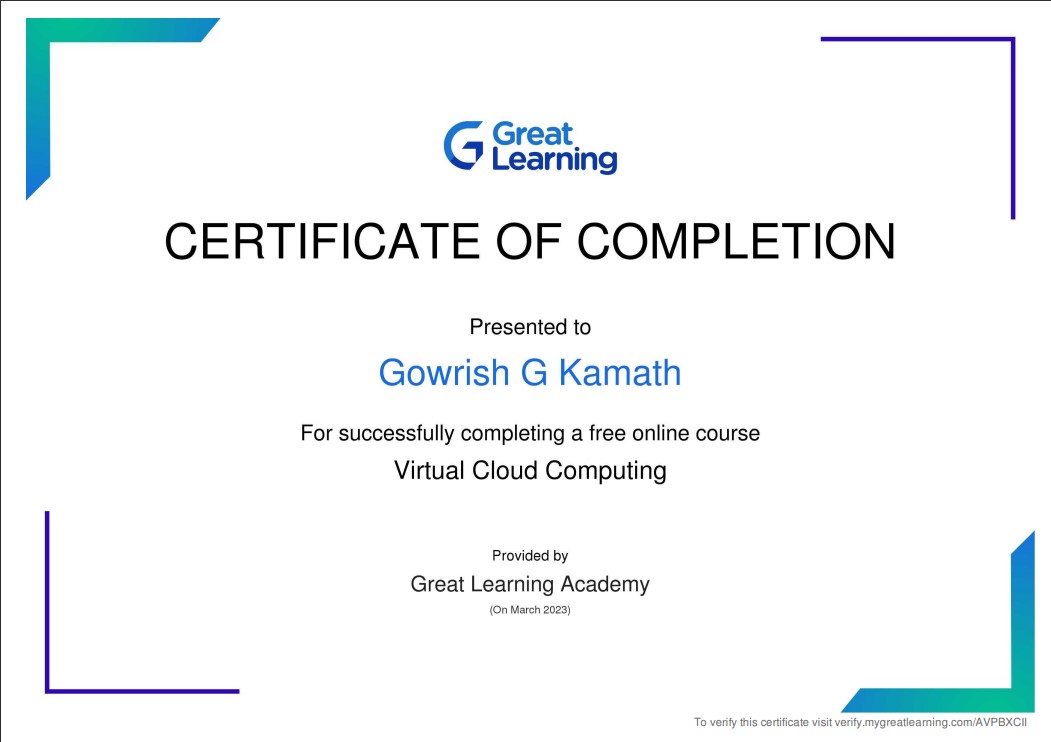
My Certifications
Web Development
Web development is a complex process that involves multiple stages, from design to deployment.
Developers use various tools and technologies to create functional, responsive, and visually appealing
websites. Some key aspects of web development include:
1. Front-end development, which involves creating the user-facing components of a website using HTML,
CSS, and JavaScript.
2. Back-end development, which involves building the server-side components of a website using
programming languages like PHP, Python, or Ruby.
3. Web design, which focuses on creating a visually appealing and intuitive user interface for the
website.
4. Web content management, which involves creating, editing, and publishing content on the website.
5. Deployment, which involves uploading the website to a web server and making it accessible to the
public.
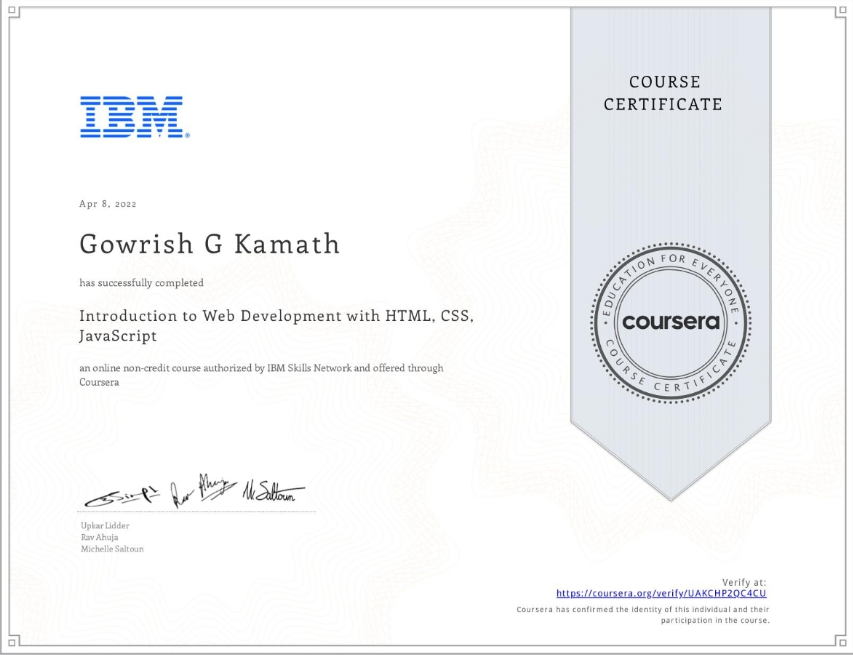
Introduction to Web Development with HTML, CSS, JavaScript
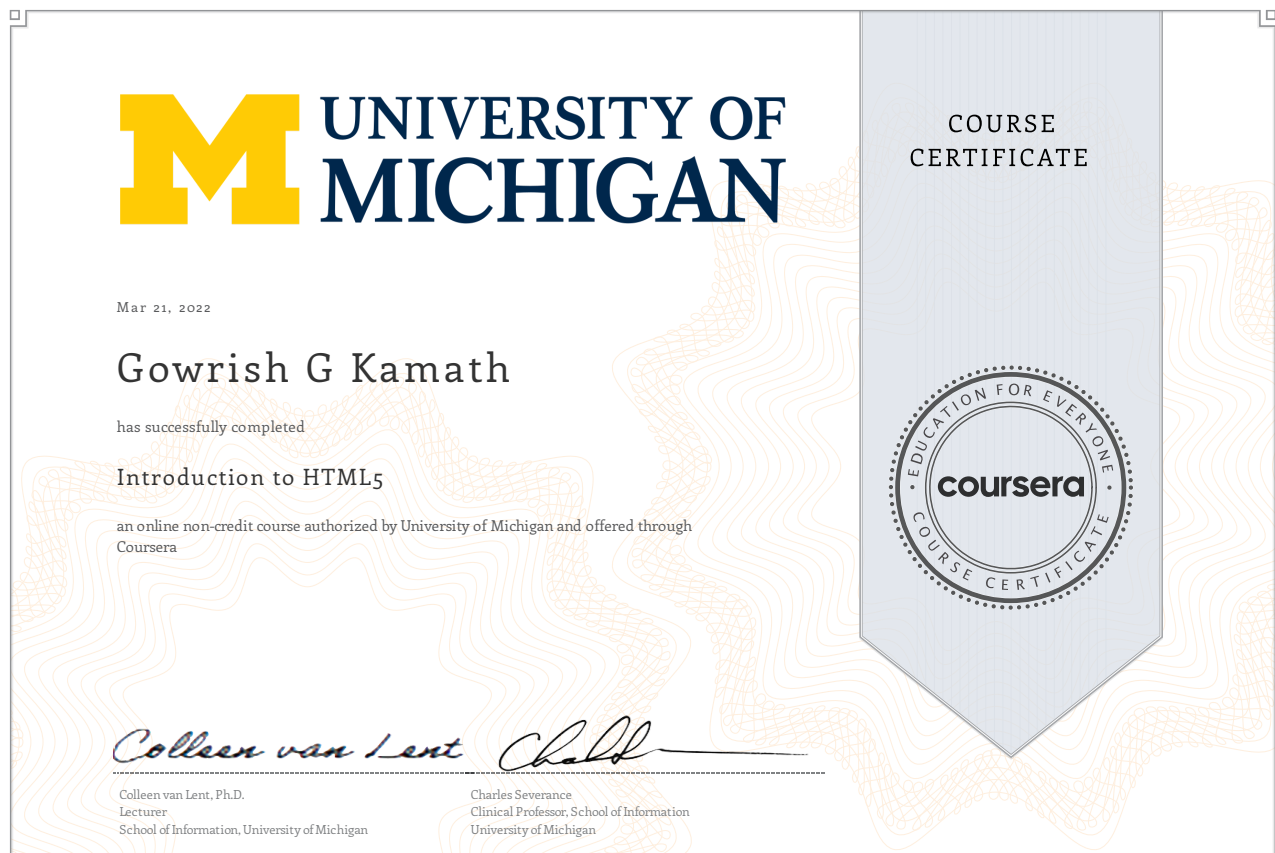
Introduction to HTML5
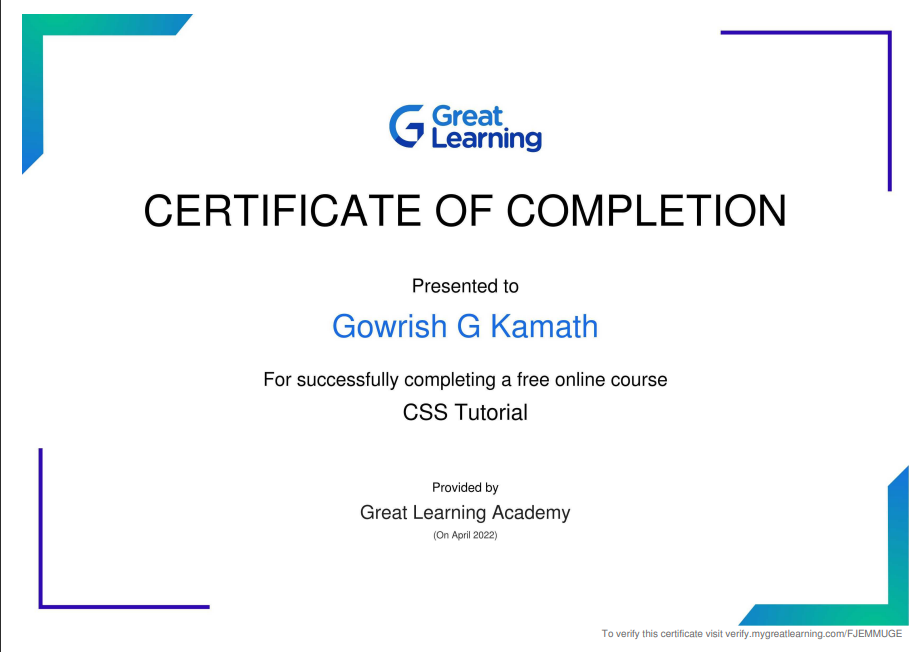
CSS Tutorial
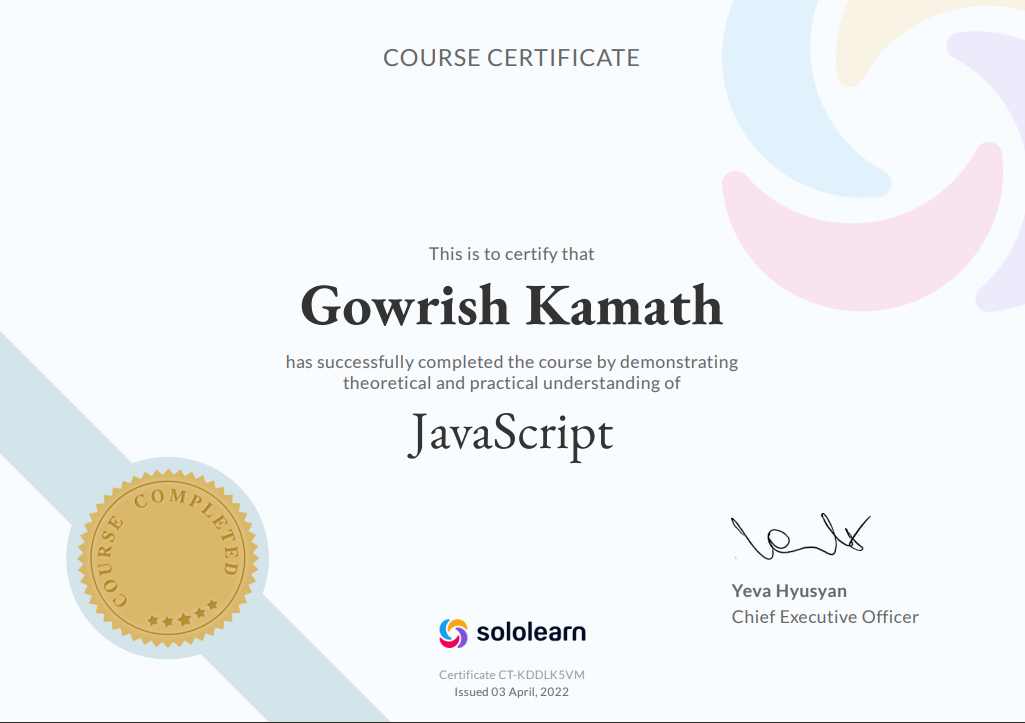
JavaScript Tutorial

Guided Projects
Coursera Guided Projects are short, hands-on assignments designed to help learners develop practical
skills in a specific domain or technology.
1. Azure DevOps Board is a project management tool that allows teams to track work items and
collaborate on software development.
2. Glide enables no-code app development using Google Sheets as a data source, making it easy to
create custom mobile apps without any coding skills or experience required.
3. Google Ads for Beginners is an online course that provides an introduction to Google's advertising
platform and teaches the fundamentals of creating, managing, and optimizing ad campaigns for
businesses of all sizes.
4. Introduction of microsoft that is a beginner-level course, Introduction to Microsoft Excel, covers
the basics of organizing and analyzing data with Excel, including creating spreadsheets, formatting
cells, and creating charts and graphs.
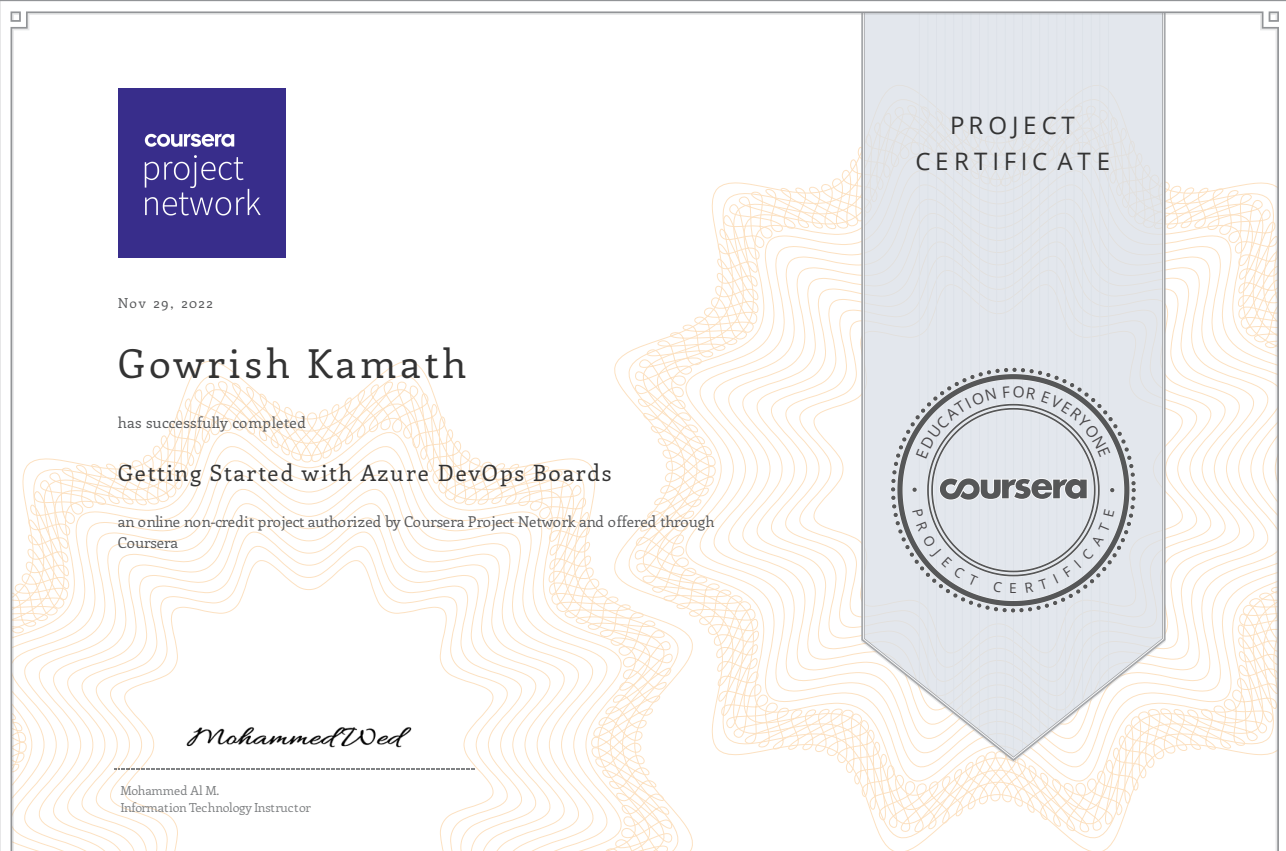
Getting Started with Azure DevOps Boards
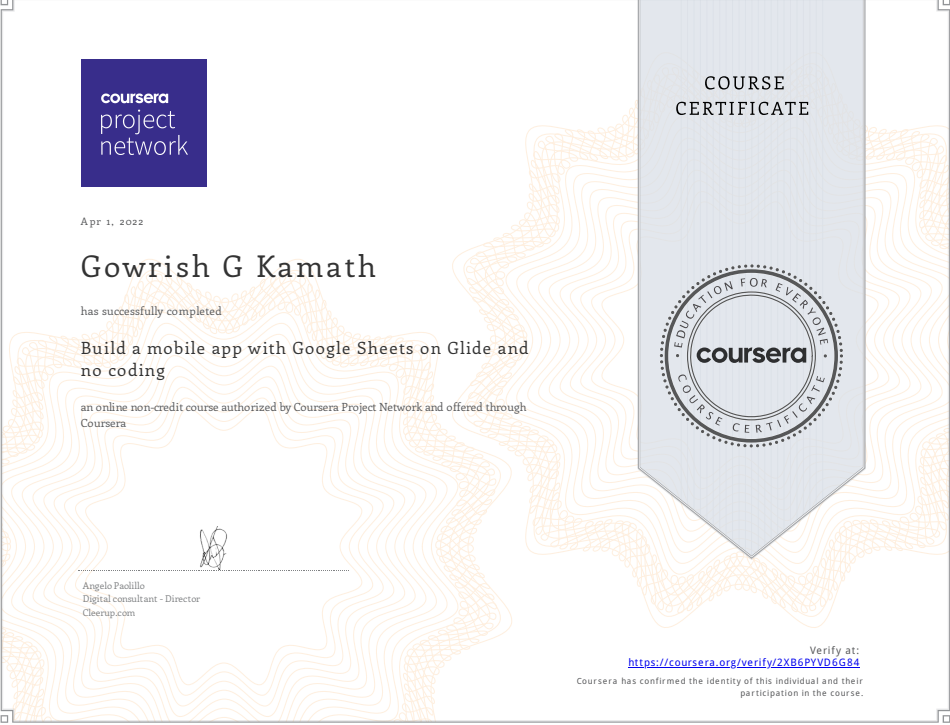
Build a mobile app with Google Sheets on Glide and no coding
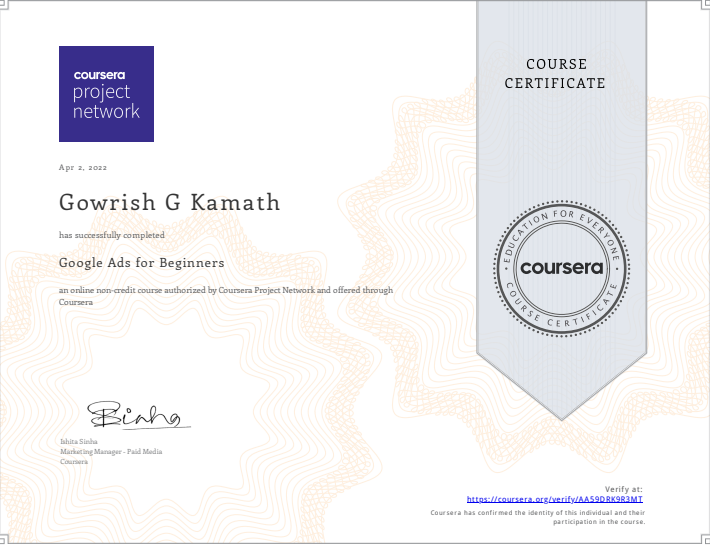
Google Ads for Beginners
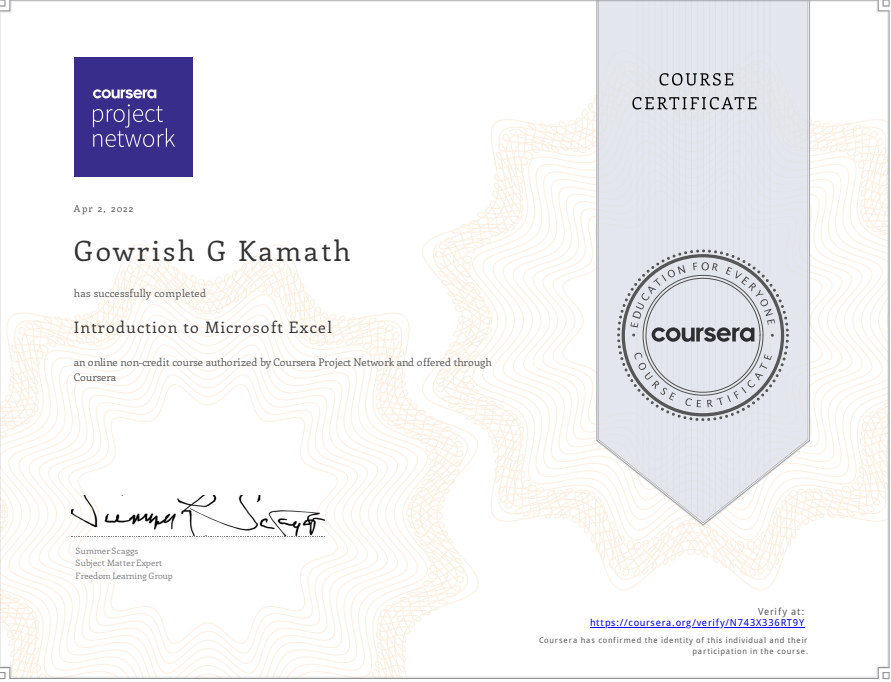
Introduction to Microsoft Excel

Services and Tools
The tools and services are essential for businesses to operate efficiently and effectively in today's
digital world. They enable companies to automate processes, manage data, enhance productivity, and
gain insights into their operations to make better-informed decisions. With the increasing reliance on
technology in all aspects of business, the demand for these tools and services is expected to continue
growing.
1. Google Analytics: With Google Analytics, website owners can track metrics such as pageviews, bounce
rates, and conversions to gain insights into how users interact with their website. This data can be
used to make informed decisions about website design, content, and marketing strategies.
2. Microservices: Microservices are designed to be loosely coupled, meaning that each component can be
developed and deployed independently of the others. This approach enables faster development and
deployment of software applications, as well as greater scalability and flexibility.
3. Project management: Effective project management involves defining project objectives, creating a
project plan, allocating resources, tracking progress, and managing risks and issues. Project managers
must also communicate effectively with stakeholders and team members to ensure project success.
4. Step into RPA: The Step into RPA course provides an introduction to Robotic Process Automation,
which is a rapidly growing field that uses software robots to automate repetitive tasks. The course
covers the basics of RPA, including tools and techniques for creating and deploying software robots.
It is suitable for anyone interested in learning about this emerging technology.
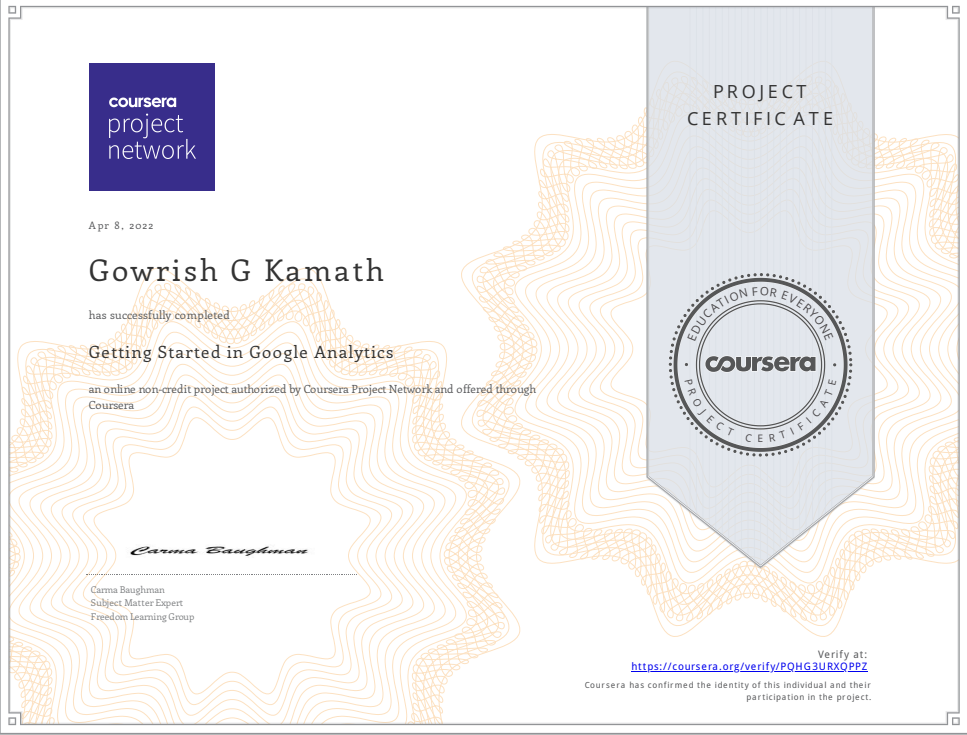
Getting Started in Google Analytics
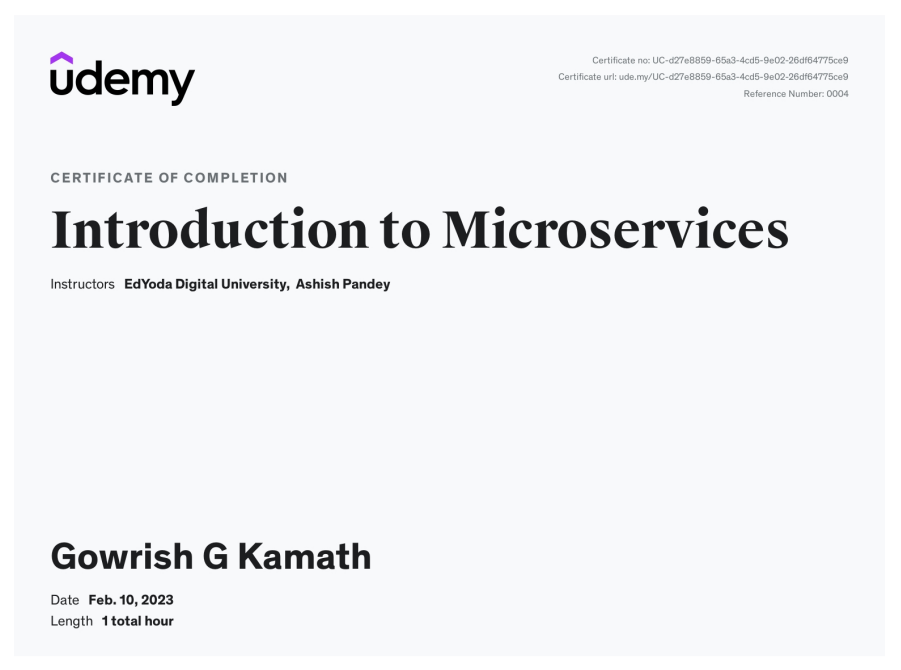
Introduction to Microservices
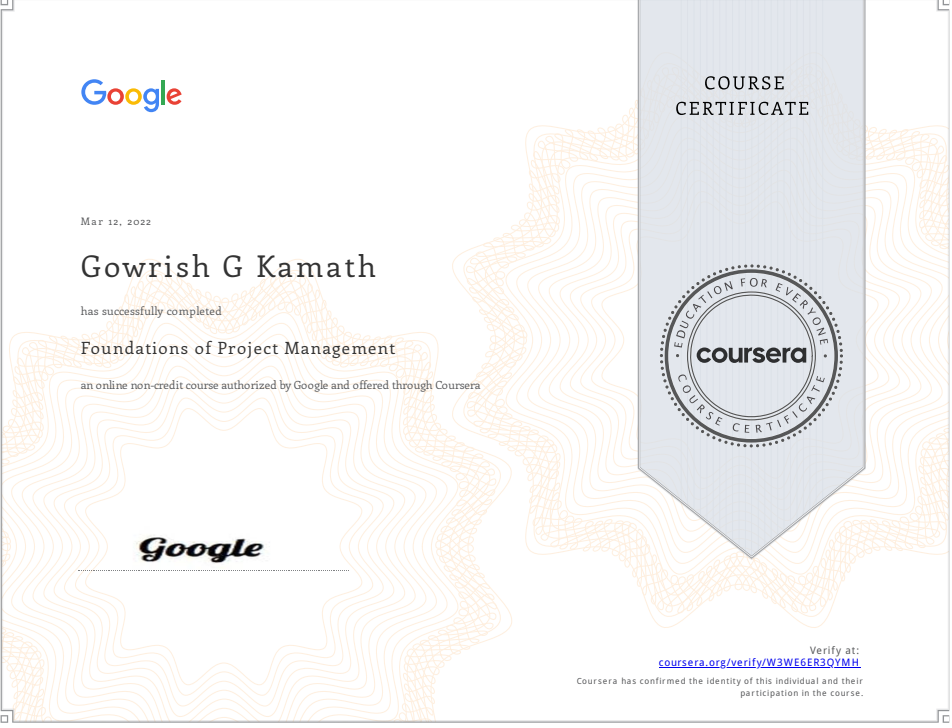
Foundations of Project Management
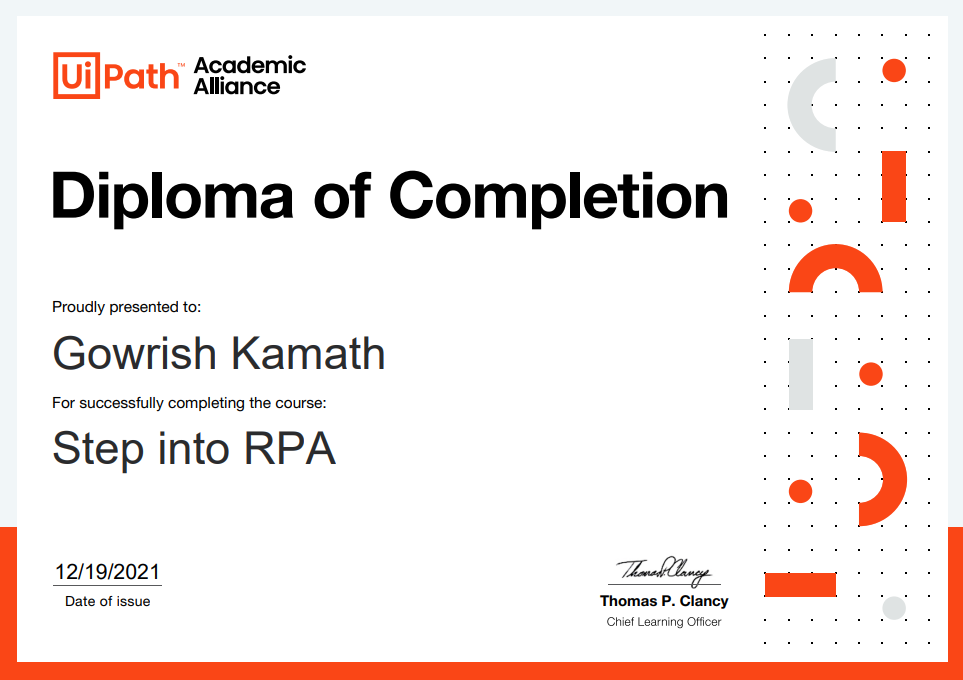
Step into RPA

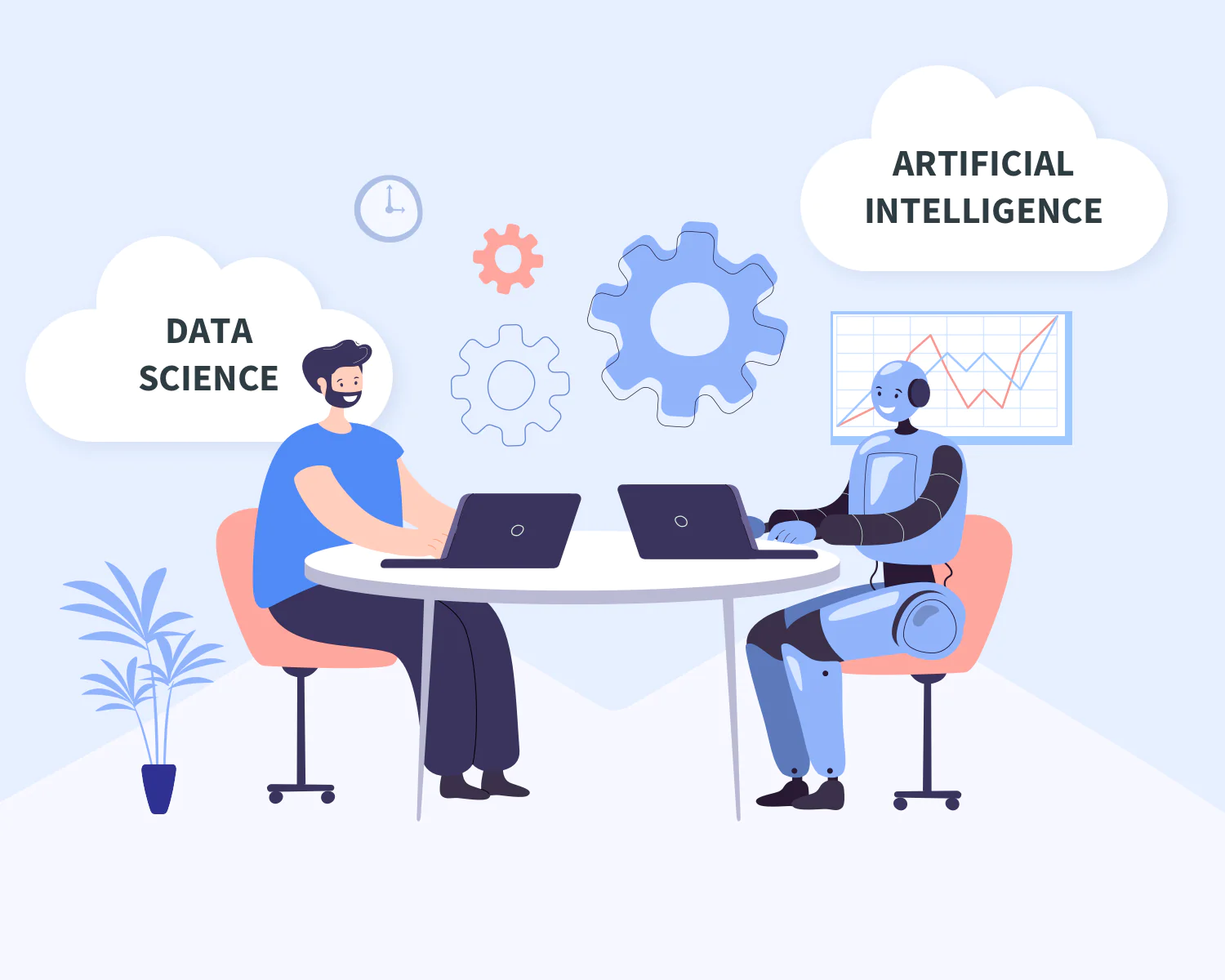
Data Science & Artificial Intelligence
. Data science involves using statistical and computational techniques to analyze, visualize, and
interpret complex datasets. The insights gained from data analysis can inform decision-making,
identify patterns, and make predictions.
. Artificial intelligence involves the creation of intelligent machines that can perform tasks that
typically require human intelligence, such as learning, problem-solving, decision-making, and language
understanding. AI relies on algorithms and large datasets to train machines to perform specific tasks.
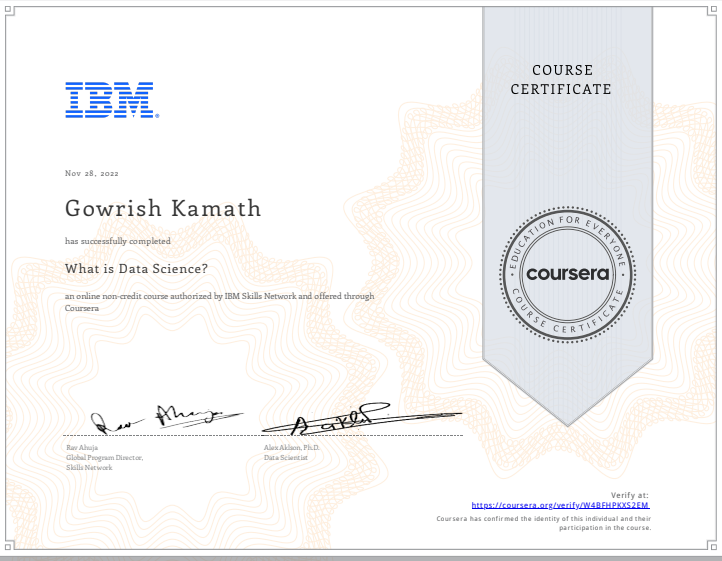
IBM-What is Data Science?
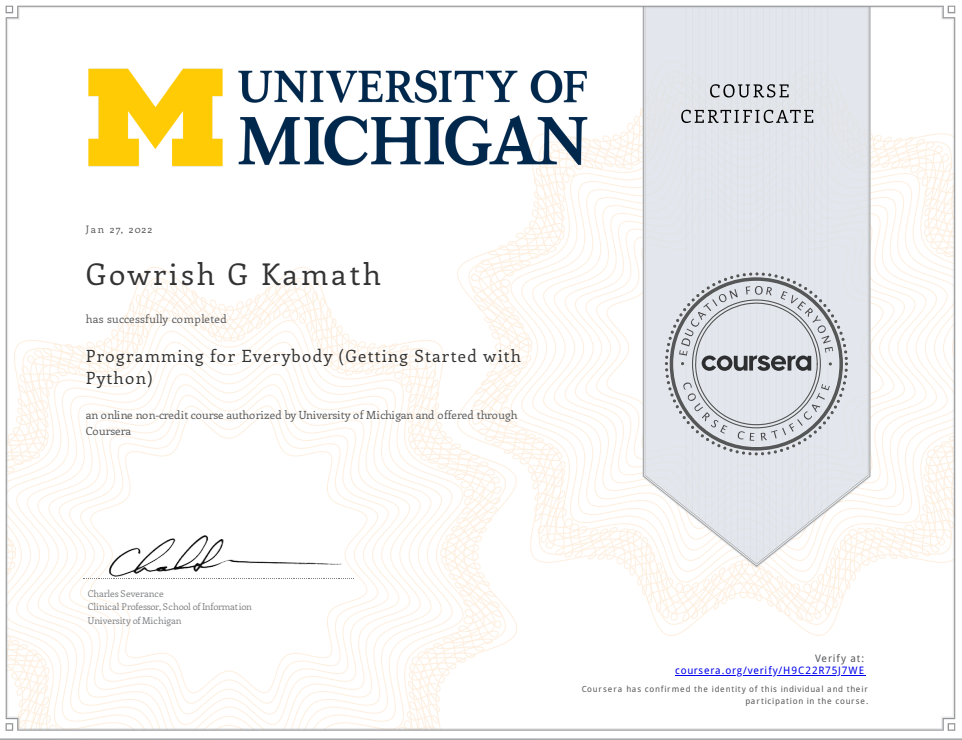
Programming for Everybody (Getting Started with Python)
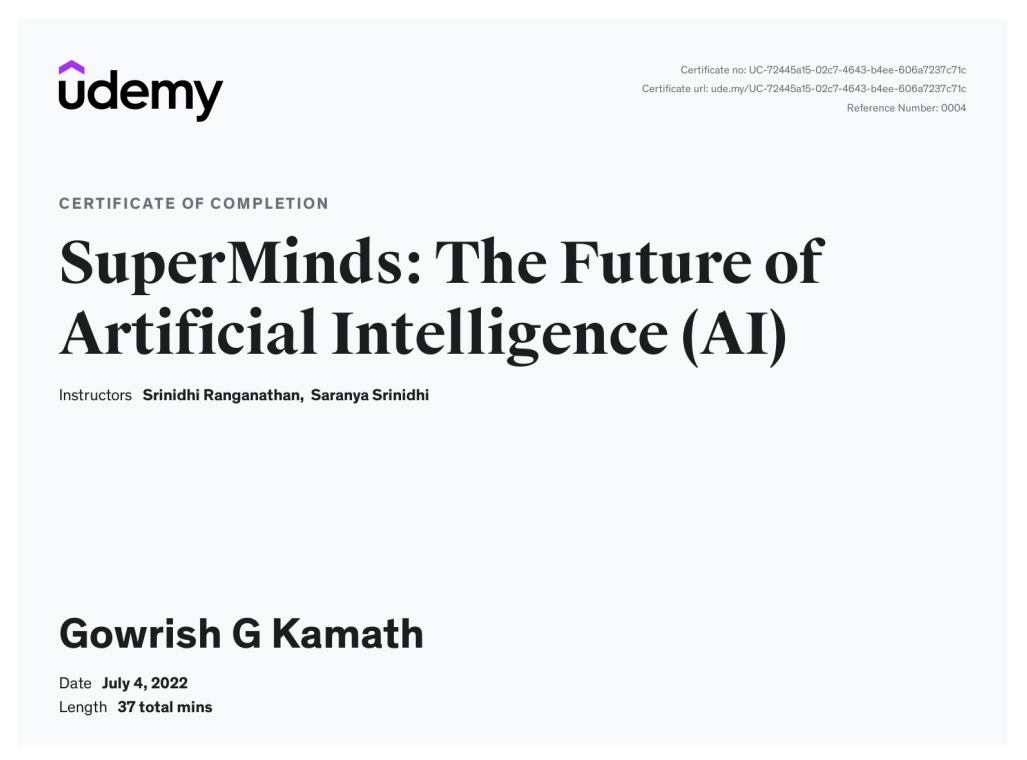
SuperMinds: The Future of Artificial Intelligence (AI)
Ui/Ux
UI/UX design is the process of designing user interfaces and experiences for digital products. Figma
and Canva are two popular design tools used in this process.
1. Figma is a web-based design tool used for creating user interface designs, prototypes, and design
systems. It allows for real-time collaboration and sharing of designs, making it popular among design
teams.
Canva is a graphic design platform used for creating a variety of designs, including social media
posts, presentations, and marketing materials. It offers a range of pre-designed templates, graphics,
and images, making it a popular tool for non-designers and small business owners.
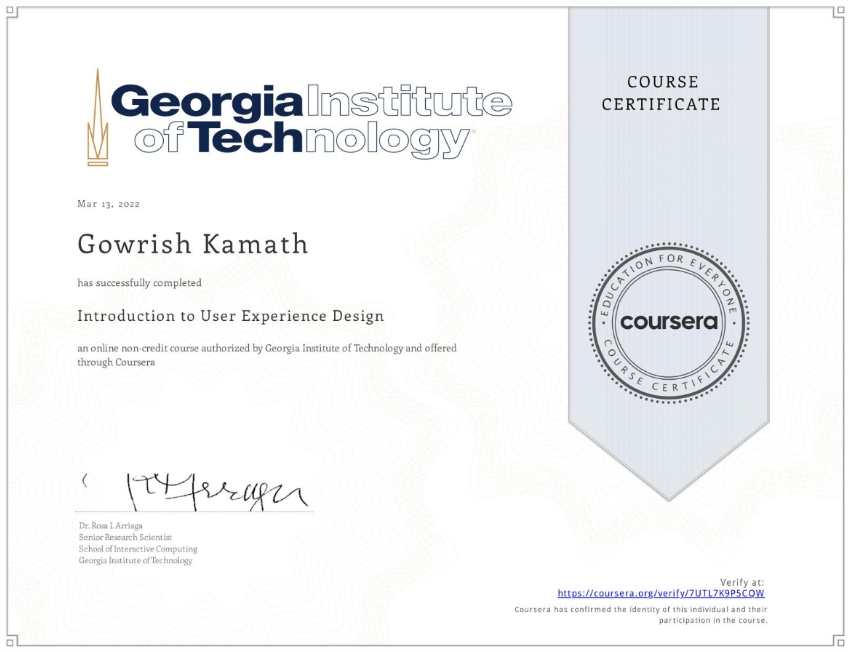
Introduction to User Experience Design
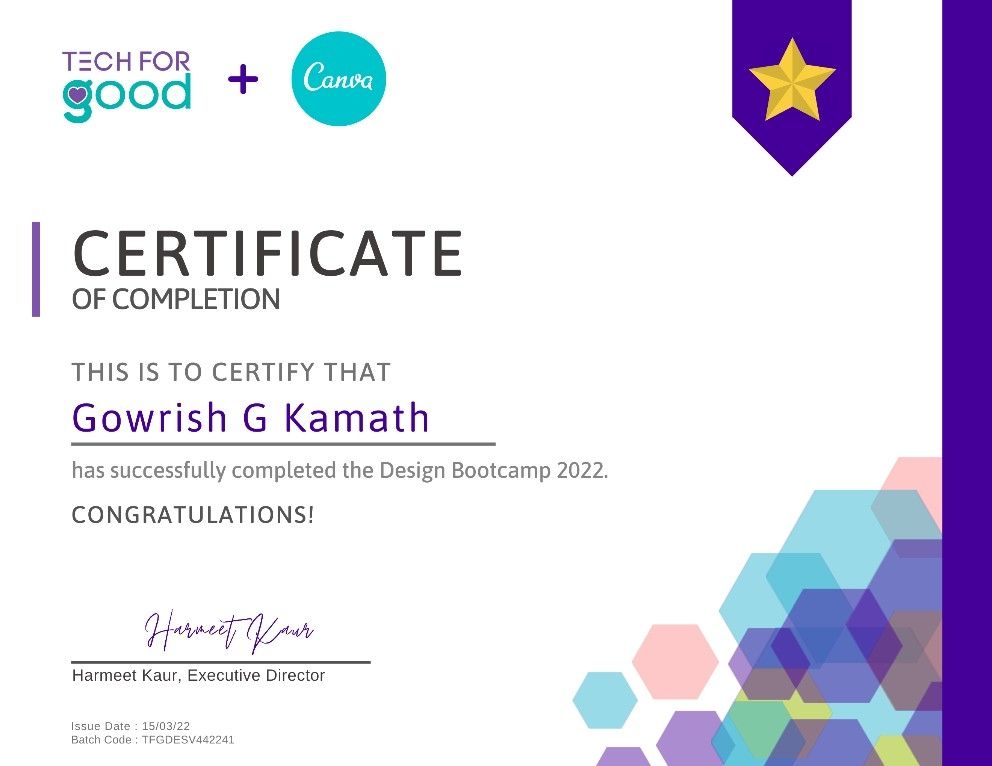
Tech For Good + Canva Design Bootcamp (2022)
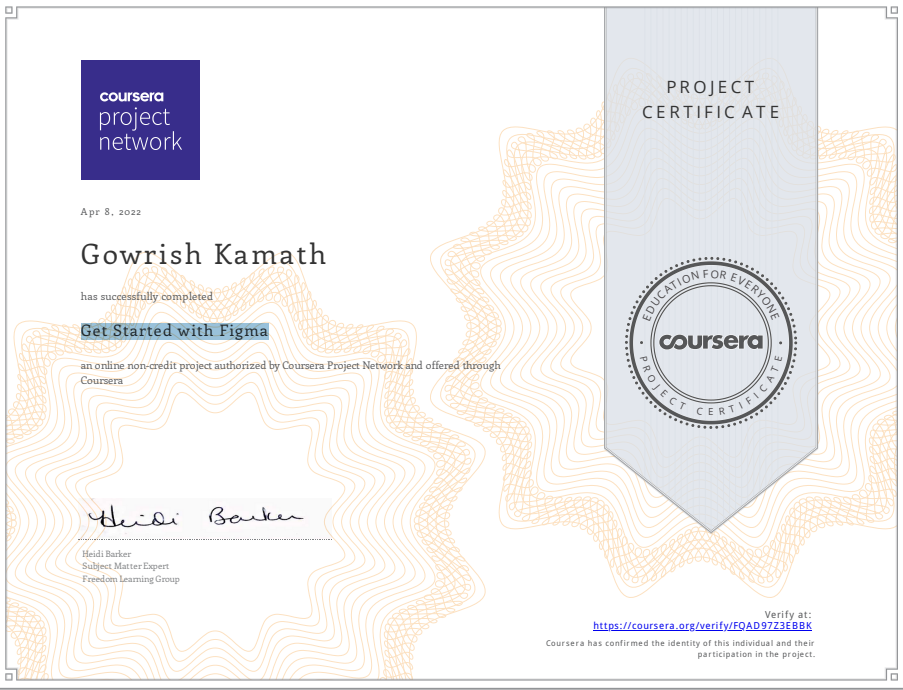
Get started with Figma
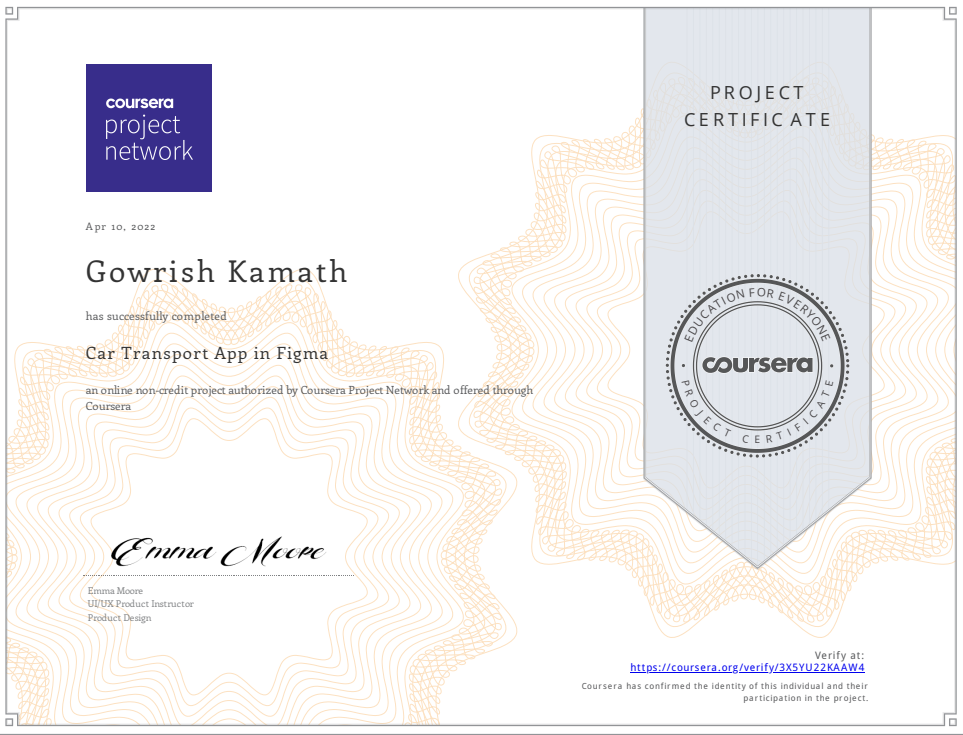
Car Transport App in Figma

Diploma and Other Certificates
1. A diploma in computer applications is a course of study that provides students with the foundational
knowledge and skills necessary to work with computers and software applications. It covers a range of
topics, including computer fundamentals, programming, database management, and web development. A
diploma in computer applications can prepare students for careers in a variety of fields, including
software development, IT support, and database administration.
Tech workshops and bootcamps are intensive learning programs designed to provide participants with
practical skills and knowledge in various technology fields.
Tech workshops are usually short-term and focused on a specific technology topic or skill. They are
often conducted in person or online and provide participants with an opportunity to learn from industry
experts, gain hands-on experience, and network with peers.
Bootcamps, on the other hand, are longer-term and more intensive programs that aim to provide
participants with a comprehensive understanding of a particular technology field. They often require a
full-time commitment and can last from several weeks to several months. Bootcamps are designed to
provide participants with the skills and knowledge needed to enter the job market as professionals in
the technology industry.
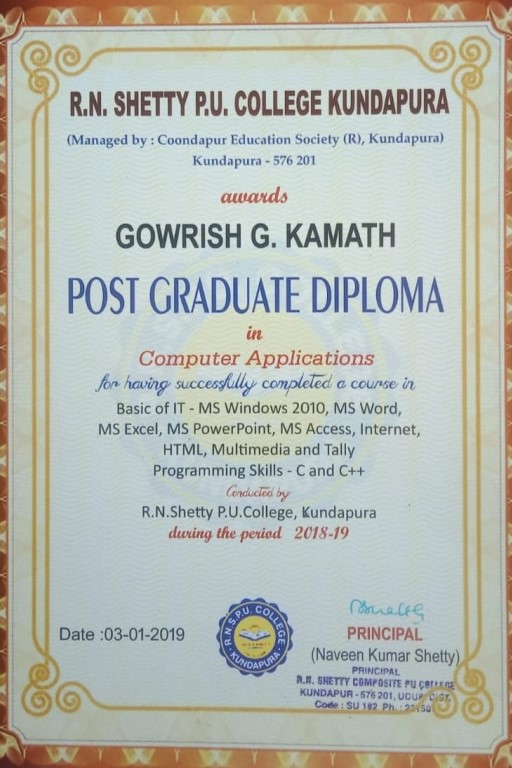
Diploma in Computer Applications (2019)
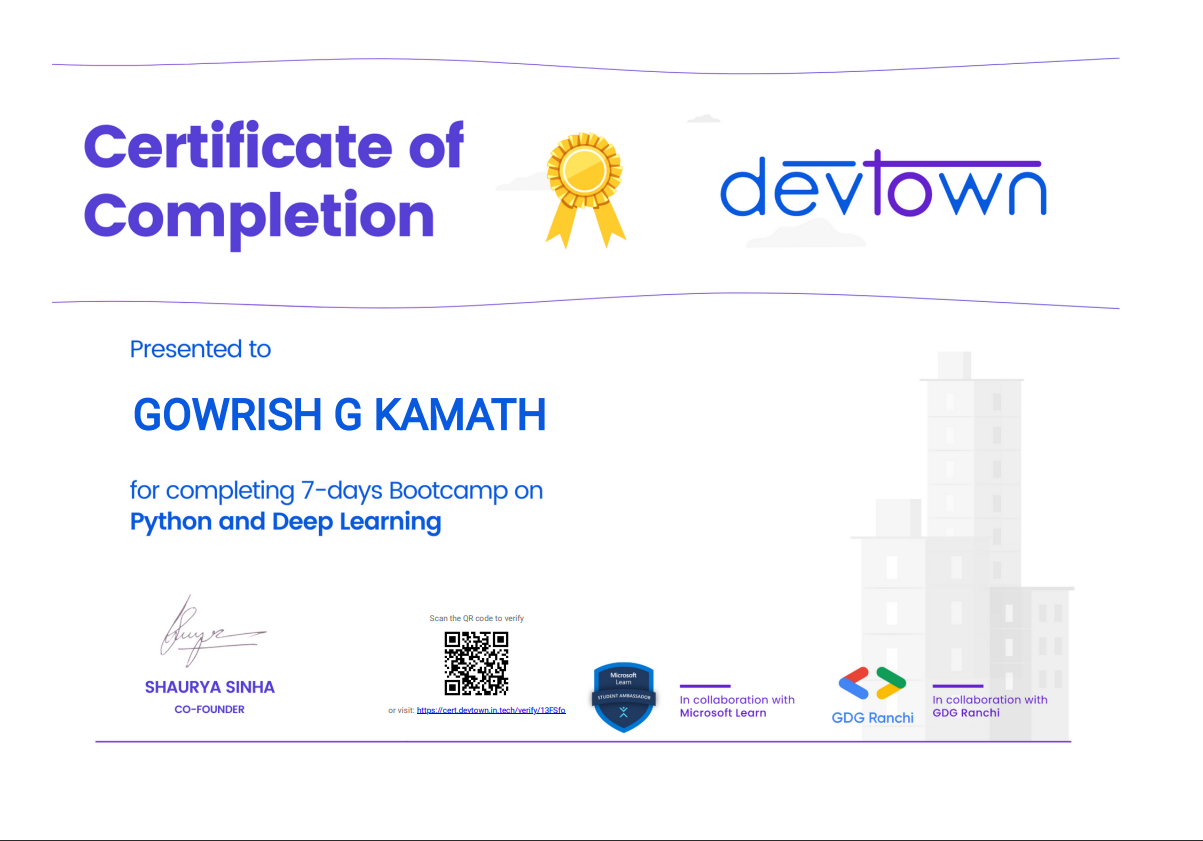
Python and Deep Learning(7 Days Bootcamp)
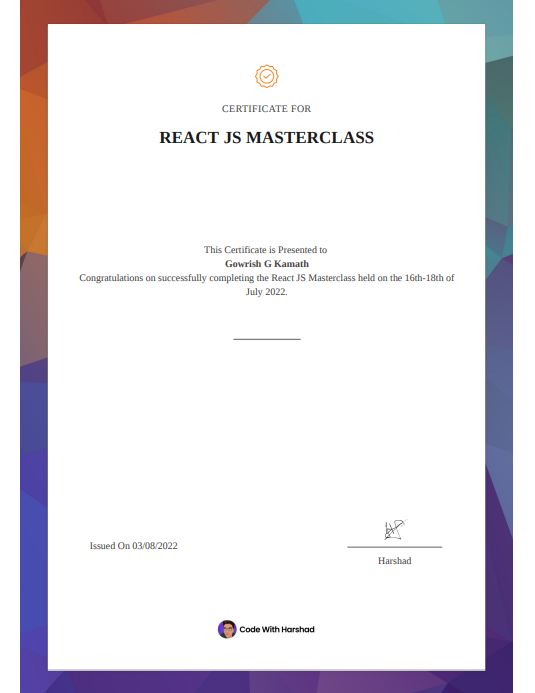
REACTJS-MASTERCLASS
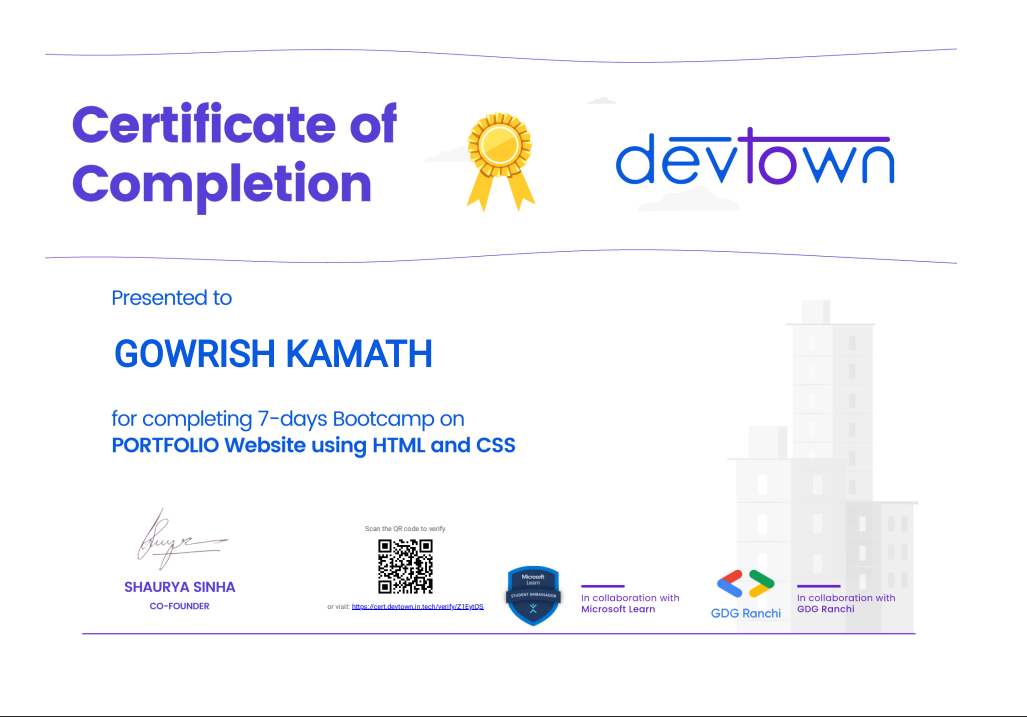
Portfolio Website using HTML ,CSS , JavaScript
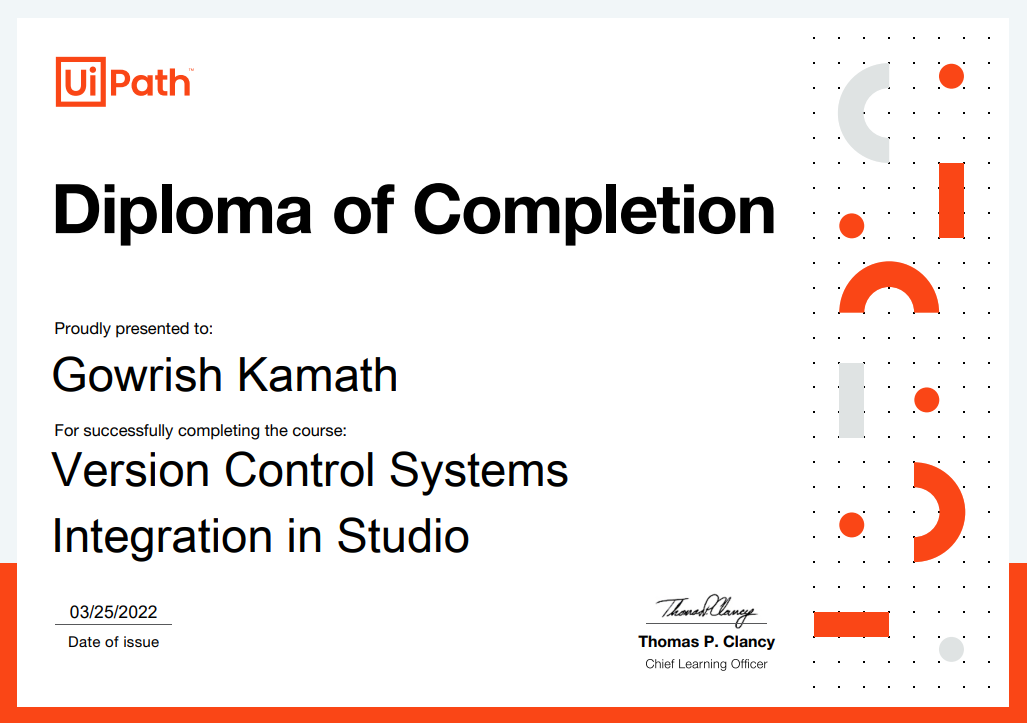
Version Control System and Integration in Studio
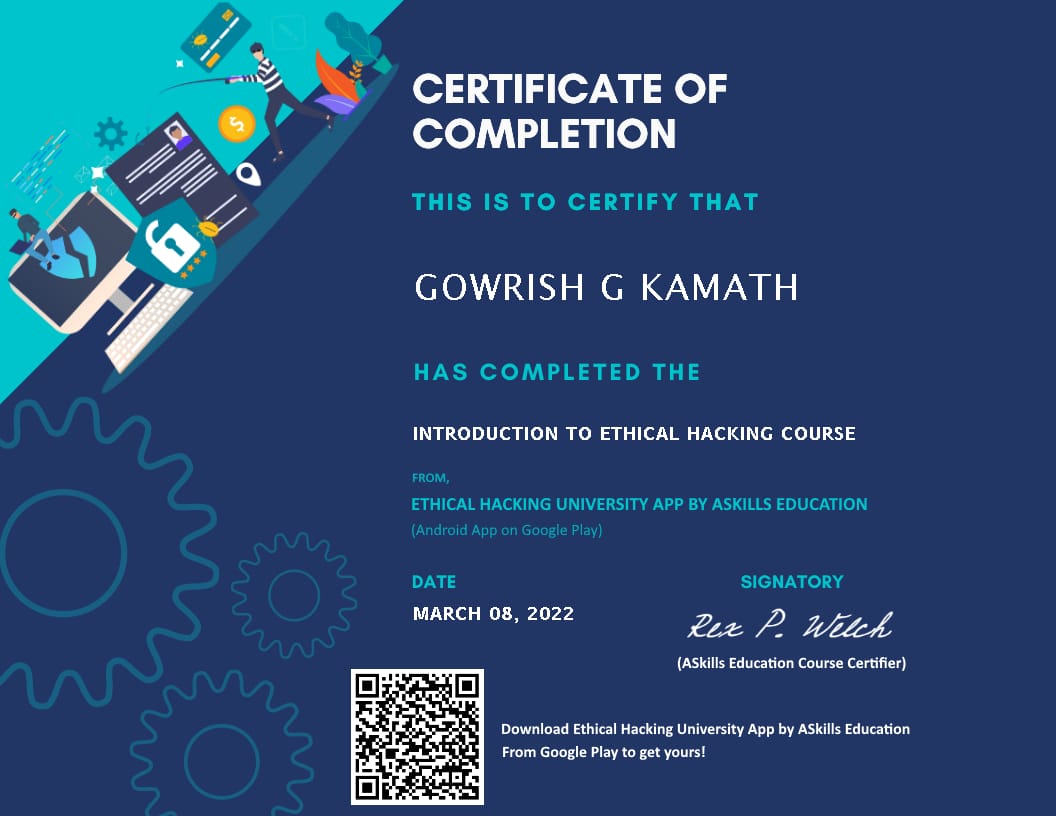
Introduction to Ethical Hacking Course
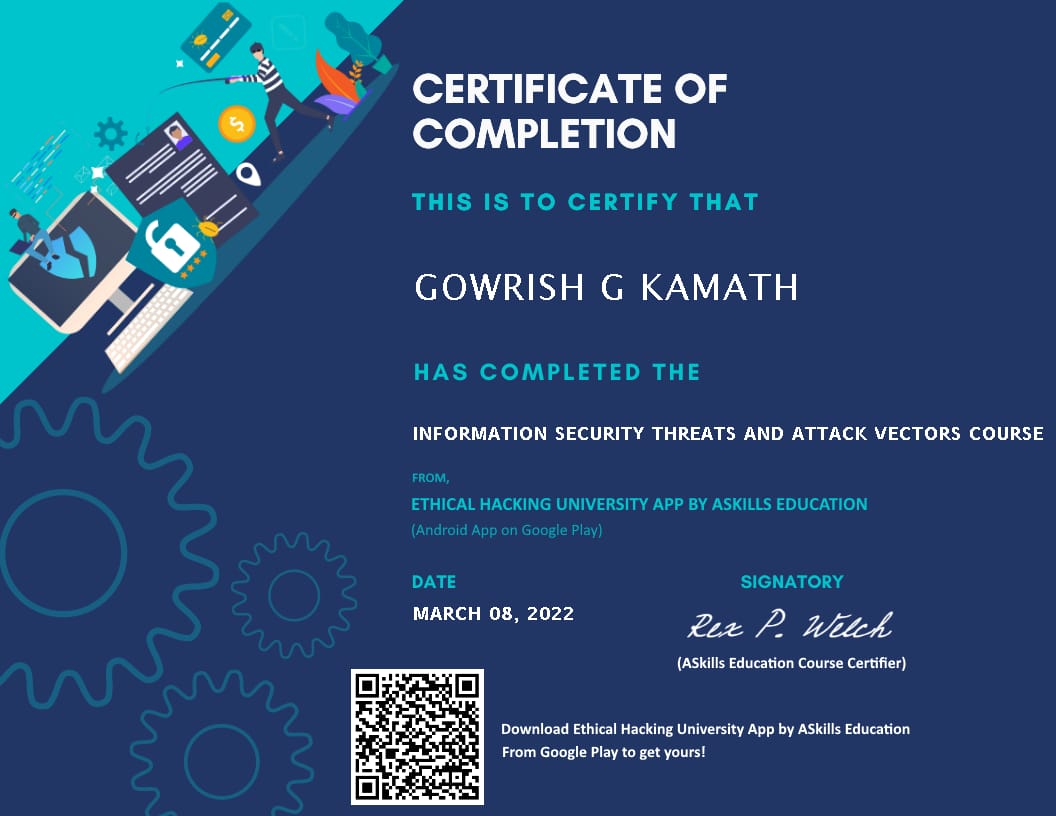
Information Security threat and Attack vector Course
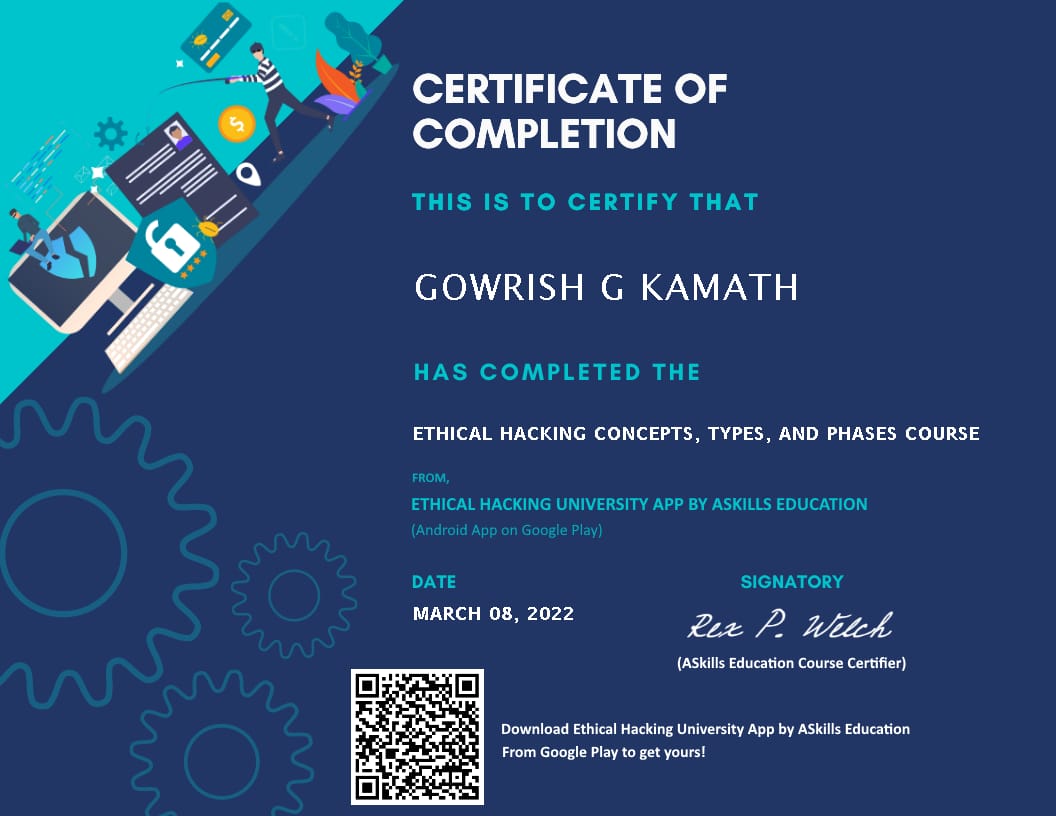
Ethical Hacking Concepts ,types and Phases Course
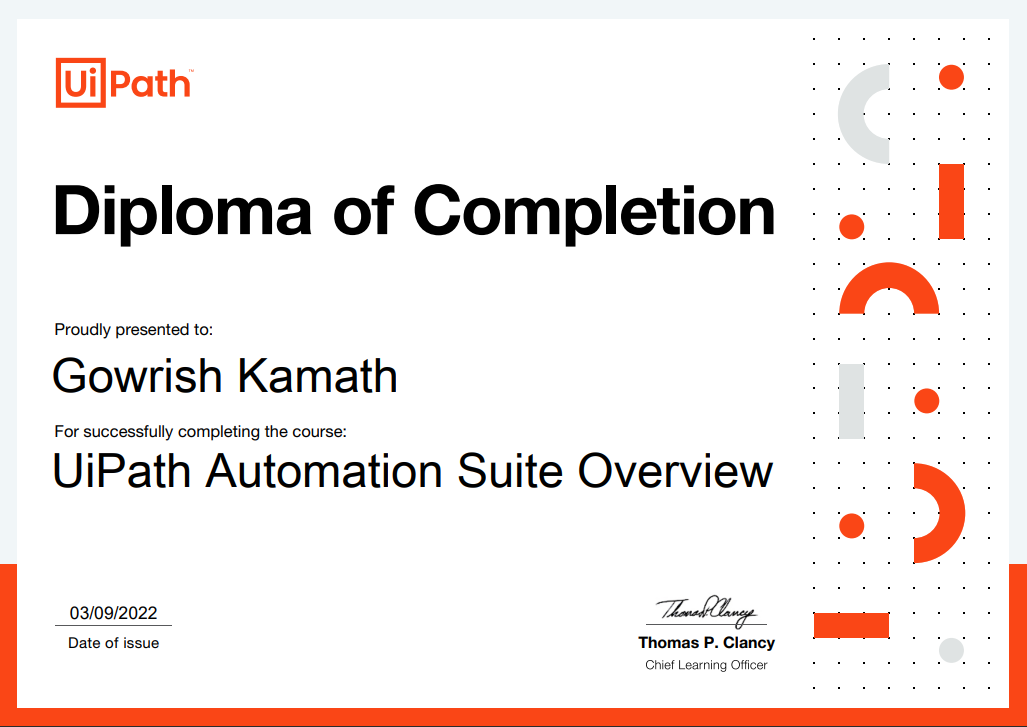
Uipath Automation Suite Overview
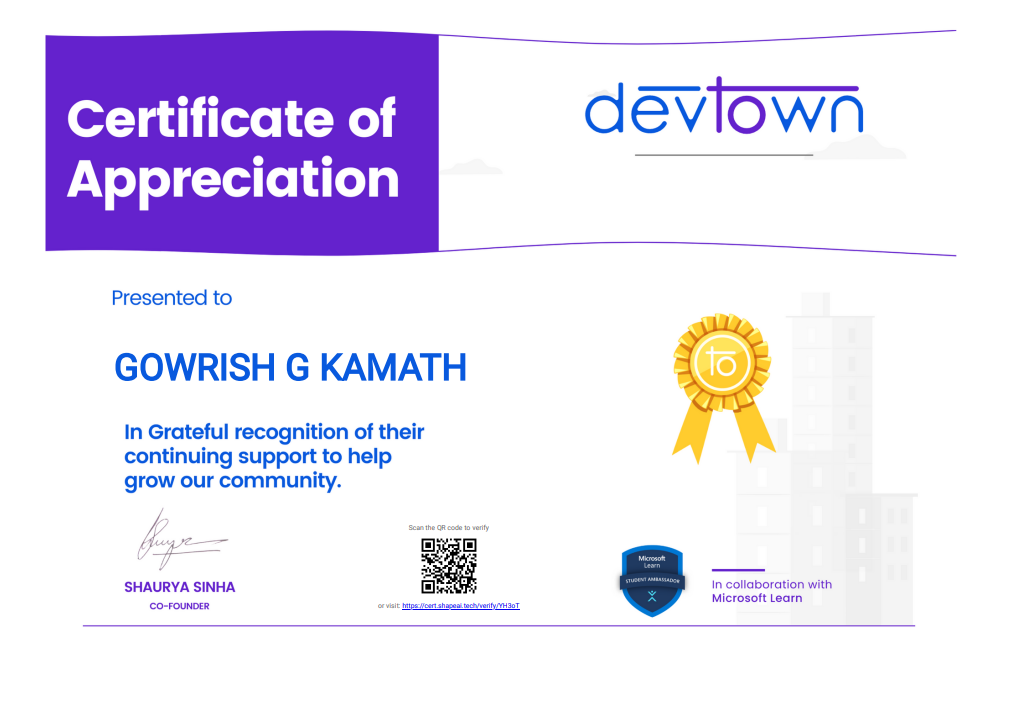
DevTown : Certificate of Appreciation
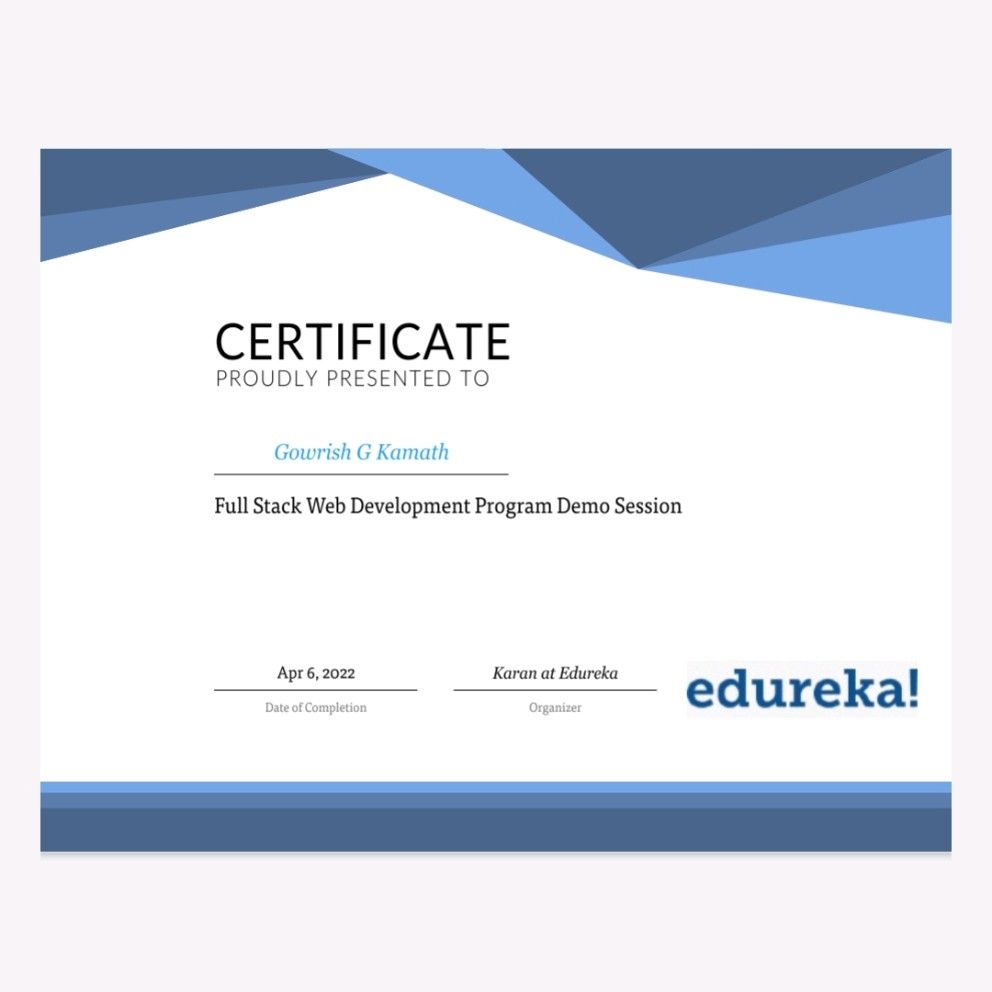
Full Stack Web Development Program
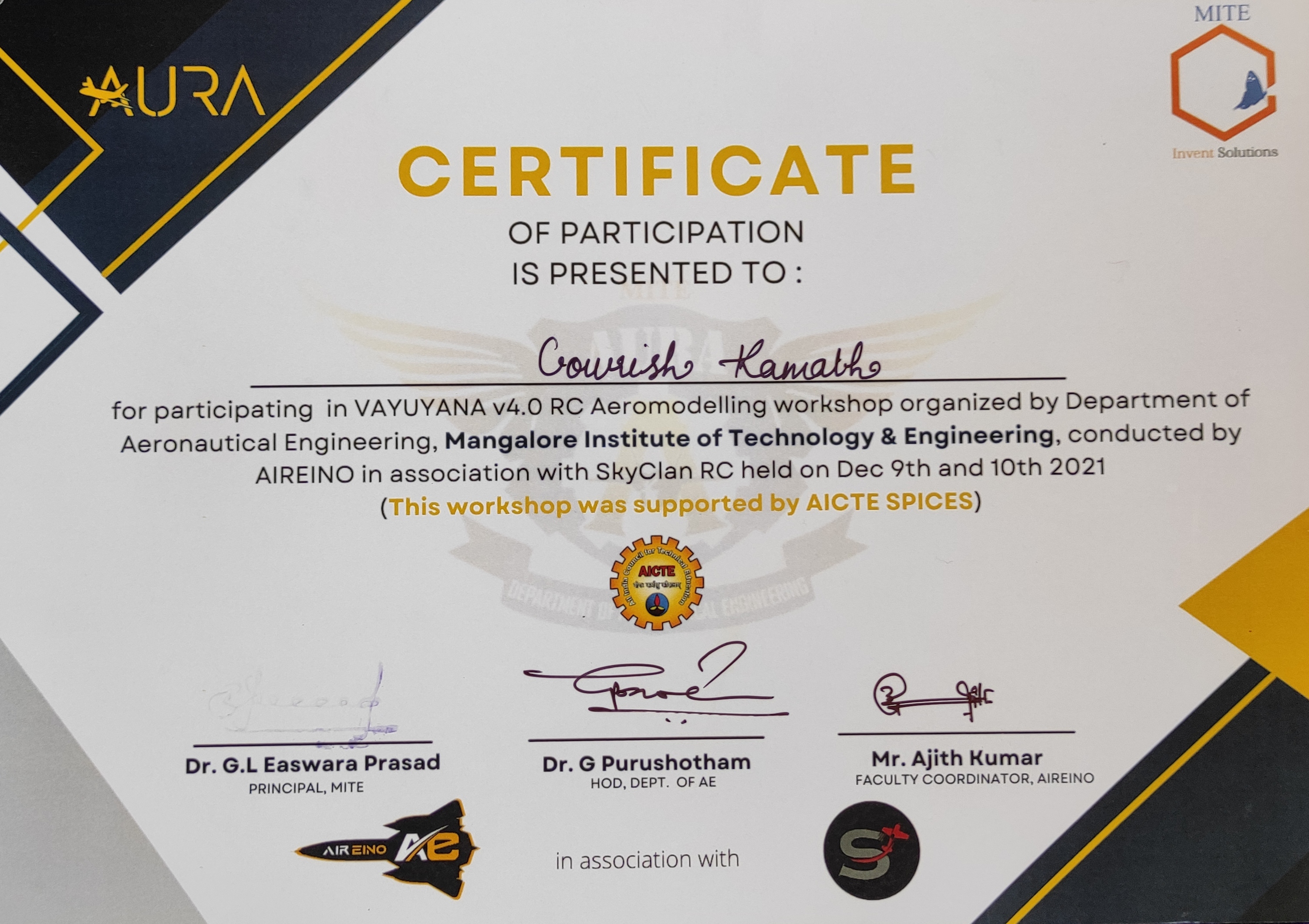
Vayuyana RC Aeromodelling workshop (2021)
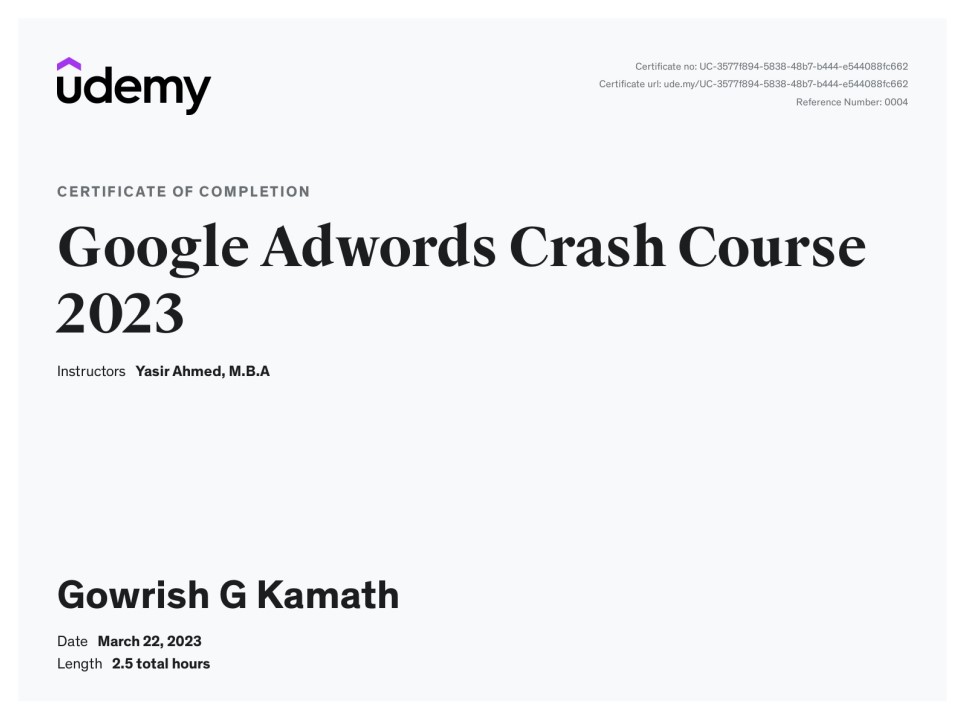
Google Adwords Crash Course 2023